I first fell in love with Greek salad during a sunny afternoon at a little taverna by the sea on my last trip to Greece. The vibrant colors of the fresh vegetables, the briny olives, and the creamy feta cheese drizzled with golden olive oil were nothing short of mesmerizing. I remember thinking, “I need to recreate this at home!” Not only was it a way to relive those sun-drenched days, but I also wanted to bring that fresh, simple joy into my kitchen without breaking the bank or relying on takeout.
After several attempts that ranged from too soggy to overly salty (who knew you could drown a salad?), I finally perfected my Best Greek Salad Recipe after what felt like an eternity — about six tries! Each version had its quirks: one was too heavy on the dressing, another lacked that zingy freshness I craved. But with each misstep, I learned something new about balancing flavors and textures, and trust me, my neighbors got very accustomed to receiving “salad leftovers” as I fine-tuned my technique!
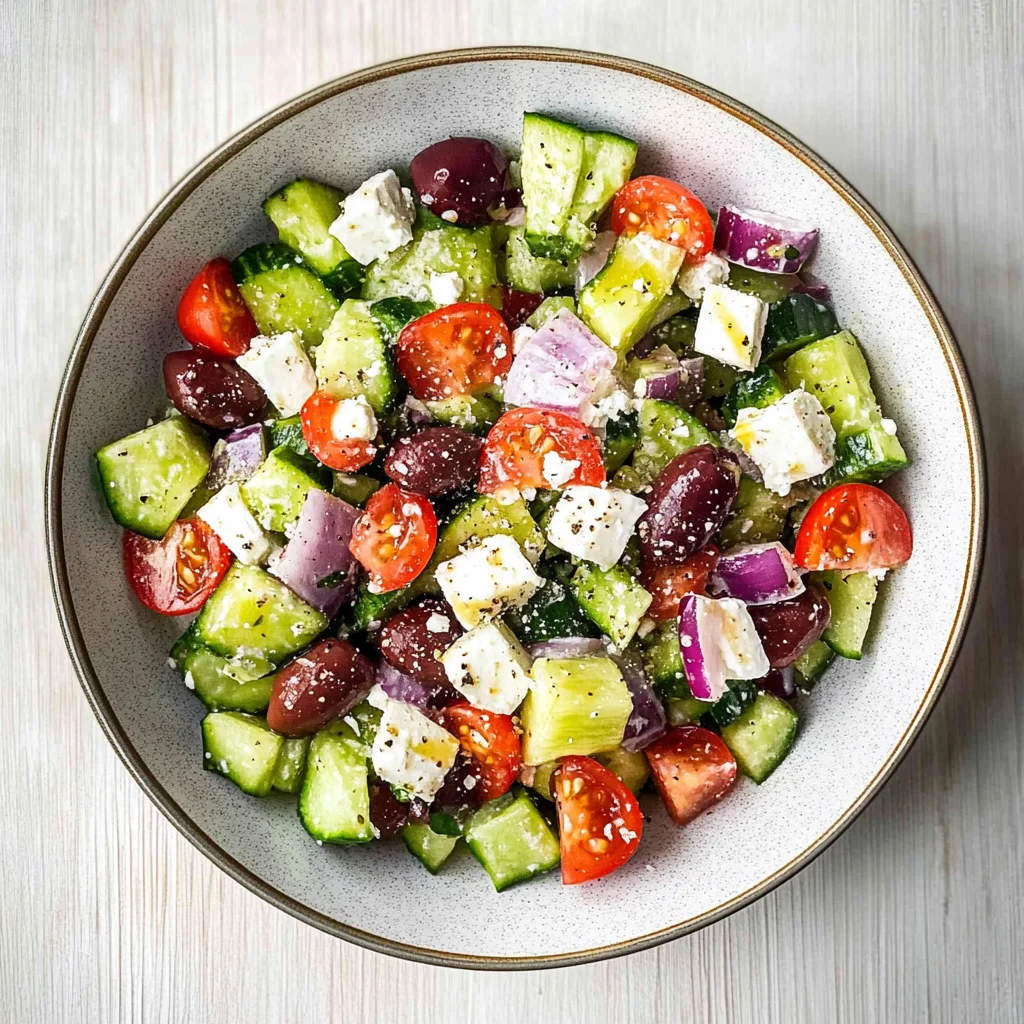
But oh boy, was it worth it! The final result is a refreshing and vibrant Greek salad bursting with crunch from the crisp cucumbers and bell peppers, complemented by the rich creaminess of feta and the salty kick of olives. It’s not just beautiful to look at; it’s packed with flavor that dances on your palate. Trust me when I say this is going to become your go-to summer dish. So grab your freshest ingredients and let’s make this deliciousness happen — you won’t regret it!
These Best Greek Salad Recipe are….
….the ultimate celebration of fresh, vibrant flavors that will transport you straight to the sun-drenched shores of Greece!
1. They deliver a burst of freshness with each bite, thanks to the ripe cherry tomatoes and crisp cucumbers. The juicy sweetness of the halved cherry tomatoes complements the refreshing crunch of the diced cucumber, creating a flavor explosion that defines a true Greek salad.
2. Incredible crunch – the combination of crunchy cucumbers and bell peppers provides a delightful texture contrast. This ensures every mouthful is satisfying, making it impossible to resist reaching for seconds (or thirds!).
3. The artful layering of flavors is achieved by using thinly sliced red onions soaked briefly in vinegar before mixing. This technique mellows their sharpness while enhancing their natural sweetness, resulting in an unforgettable depth that elevates this salad above ordinary versions.
4. The affordability factor shines through with simple, accessible ingredients that you can find at any grocery store. Unlike restaurant versions, this Best Greek Salad Recipe allows you to create a deliciously authentic dish at home without breaking the bank.
PS This salad serves 4 generously and is best enjoyed fresh, making it perfect for sharing at gatherings or as a light meal!
Ingredients for the Best Greek Salad Recipe
Each ingredient in this dish plays an essential role in flavor and texture. Here’s what you’ll need:
- 2 cups cherry tomatoes (halved): These provide a burst of sweetness and vibrant color.
- 1 cucumber (diced): Adds a refreshing crunch that balances the other ingredients.
- 1 green bell pepper (diced): Contributes a mild, slightly sweet flavor and crisp texture.
- 1 small red onion (thinly sliced): Offers a sharp bite that enhances the overall taste.
- 1 cup feta cheese (crumbled): Delivers creamy richness and tangy notes that tie everything together.
- 1 cup Kalamata olives (pitted and halved): Imparts a briny depth that complements the fresh vegetables.
- 1/4 cup extra virgin olive oil (to taste): Provides smoothness and enhances all the flavors.
- 2 tablespoons red wine vinegar: Adds acidity that brightens the salad.
- 1 tablespoon lemon juice (freshly squeezed): Infuses freshness with zesty brightness.
- 1 teaspoon dried oregano (to taste): Brings a classic herbal note that defines Greek salads.
- 1 pinch salt (to taste): Enhances and balances the flavors throughout the dish.
- 1 pinch black pepper (to taste): Adds a subtle warmth to round out the seasoning.
You absolutely must toss the vegetables gently. Trust me!
I’ll be honest: I thought I could skip the gentle tossing step and just mix everything vigorously, thinking it wouldn’t make a difference. Spoiler alert: it did. My first attempt ended up looking like a sad heap of mushy veggies instead of the vibrant Greek salad I was dreaming of. Lesson learned, folks!
Why is this gentle touch so crucial? Think of it like cradling a newborn — too much force, and everything goes haywire! When you toss the cherry tomatoes, cucumber, green bell pepper, and red onion softly, you’re allowing each ingredient to maintain its structure and crispness while also ensuring they’re evenly coated in that heavenly dressing. If you’re not careful, you’ll end up with a soggy mess instead of that fresh crunch we all crave.
What does gentle tossing do?
- Texture — It keeps each vegetable crispy and firm, enhancing the overall bite.
- Flavour integration — A gentle toss allows the olive oil and seasoning to coat each piece without breaking them down.
- Visual appeal — Maintaining the integrity of each vegetable ensures your salad looks vibrant and inviting.
- Balanced distribution — Every ingredient gets its fair share of dressing without overwhelming any single component.
- Reduced mushiness — Prevents over-squishing; no one wants a salad that looks like baby food!
Different tossing intensities
- Light toss (excellent) — Vegetables remain intact with perfect crunch; this is the gold standard for a Greek salad.
- Moderate toss (good) — Some vegetables may start to break down slightly but still hold their shape; flavour is decent but less vibrant.
- Heavy toss (average) — Overly squished veggies lead to mushiness; dressing clumps together rather than coating evenly.
- Vigorous toss (poor) — Everything is reduced to pulp; what once was a fresh salad is now an unappetizing mix.
Be warned: the most common mistake is mixing too aggressively when adding the vegetables! This will ruin their texture and flavor balance. Don’t be that person who turns their beautiful Greek salad into a sad slush!
How to make Best Greek Salad Recipe
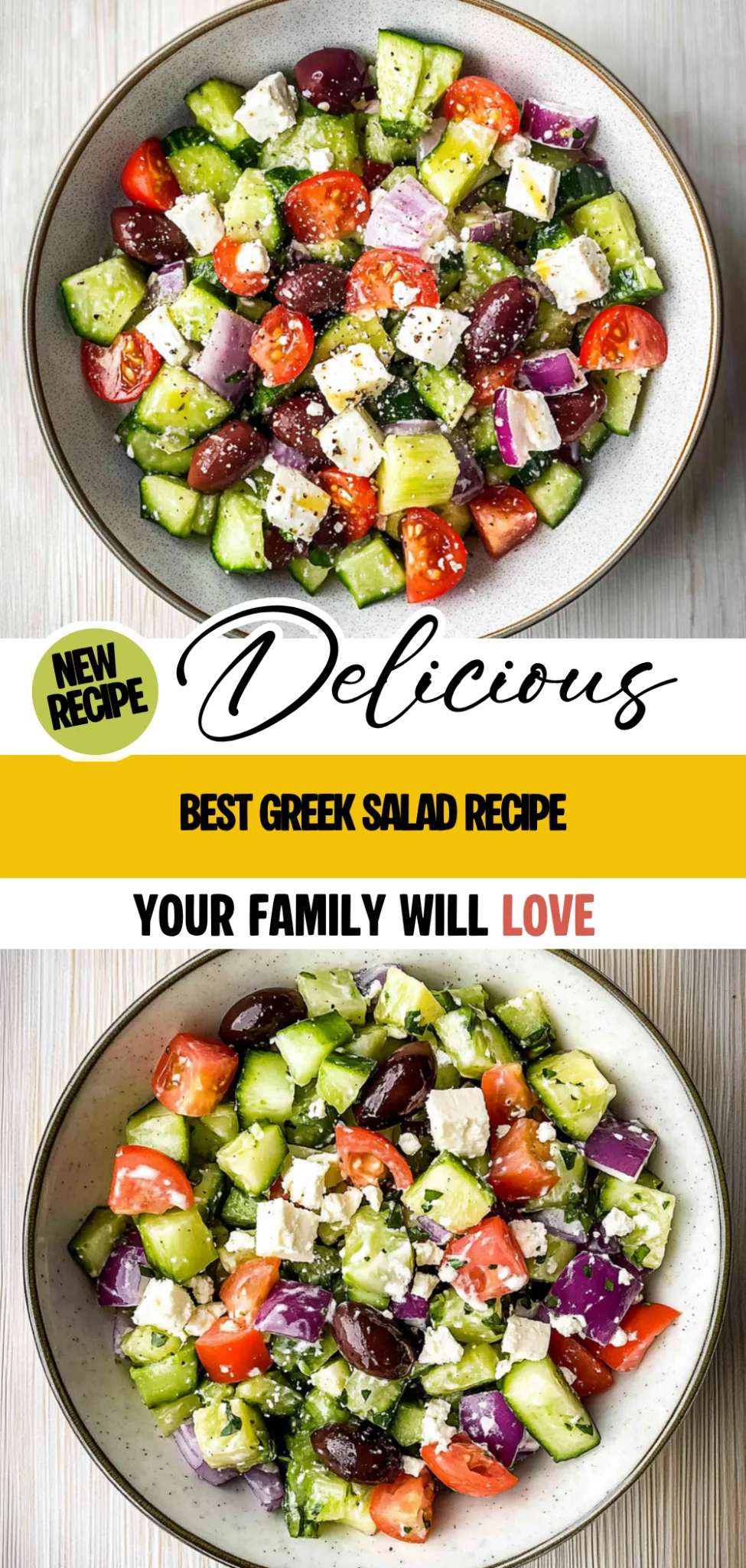
Are you ready to see how straightforward it is to make the Best Greek Salad Recipe of your dreams??
1. PREPARE THE VEGETABLES
Start with the freshest produce for a truly vibrant salad!
1. Combine – In a large mixing bowl, combine the halved cherry tomatoes, diced cucumber, diced green bell pepper, and thinly sliced red onion. The colorful array of vegetables will not only be visually appealing but also provide a delightful crunch and flavor.
2. Toss – Gently toss the vegetables to mix them evenly. This ensures each bite is filled with a medley of flavors and textures that make Greek salad so refreshing.
HANDY TIPS
- Choose cherry tomatoes that are firm and brightly colored for maximum sweetness.
- For added crunch, consider using a Persian cucumber, which has fewer seeds and a thinner skin.
2. ADD CHEESE AND OLIVES
Now it’s time to add some creamy goodness and savory bites!
3. Add – Add the crumbled feta cheese and halved Kalamata olives to the bowl with the vegetables. Feta adds a rich creaminess that perfectly complements the fresh veggies.
4. Toss Gently – Carefully toss again to combine all ingredients, being cautious not to break the feta too much. You want those lovely chunks of feta intact for delightful pops of flavor in every forkful!
HANDY TIPS
- If you prefer more flavor from your feta, try using a brined variety; it adds extra saltiness that enhances the overall taste!
- Kalamata olives can vary in saltiness—if you find them too salty, rinse them briefly under cold water before adding.
3. MAKE THE DRESSING
The dressing is where the magic happens!
5. Whisk Together – In a small bowl, whisk together the extra virgin olive oil, red wine vinegar, freshly squeezed lemon juice, dried oregano, salt, and black pepper. This dressing will elevate all the flavors in your salad.
6. Taste and Adjust – Taste your dressing and adjust seasoning as necessary—perhaps adding more lemon juice for brightness or more salt if needed? The right balance is key for making everything pop!
HANDY TIPS
- Freshly squeezed lemon juice truly makes a difference; pre-bottled simply cannot match its brightness!
- If you’re making this ahead of time, keep the dressing separate until just before serving to maintain crispness.
4. COMBINE AND SERVE
Time to bring everything together for one glorious dish!
7. Pour Dressing – Pour the freshly made dressing over the salad and toss gently once more to coat all ingredients evenly. This final touch ensures every bite bursts with flavor from that zesty dressing!
8. Serve Immediately – Transfer the salad to a serving dish and serve immediately for the best experience while everything is still fresh and vibrant.
Make this refreshing Best Greek Salad Recipe with ease and enjoy its delightful flavors! The combination of crisp vegetables, creamy feta, and tangy dressing will surely impress your friends and family alike! – Nagi x
FAQ – Best Greek Salad Recipe
🥗 How long will this Greek salad keep in the fridge?
Greek salad is best enjoyed fresh, but if you have leftovers, it can be stored in an airtight container in the fridge for up to 2 days. After that, the quality diminishes significantly—I’d say it’s about 70% as good on day 3 due to the moisture from the vegetables making the feta soggy and the tomatoes losing their firmness. If you’re not planning to finish it within those 2 days, consider keeping the dressing separate until you’re ready to eat!
⏰ Can I make this salad ahead of time?
You certainly can prepare some components in advance! The vegetables can be chopped a few hours ahead and stored in the fridge. However, I recommend adding the feta cheese and olives just before serving to maintain their texture and flavor. If you mix everything together too early, you’ll risk a wilted salad by mealtime—definitely not what we want!
❄️ Can I freeze Greek salad?
Freezing Greek salad is not recommended due to its high water content. Vegetables like tomatoes and cucumbers tend to become mushy once thawed. If you really need to store it longer, consider freezing only the feta cheese and olives separately. They can be kept in an airtight container for up to 3 months; just let them thaw overnight in the fridge before using them again.
🌱 Is there a way to make this salad vegan?
Absolutely! To create a vegan version of this Greek salad, simply omit the feta cheese or substitute it with a plant-based feta alternative. You can also use chickpeas for added protein and texture. Just make sure your olives are vegan-friendly (most are), and you’ve got yourself a delicious vegan dish!
🔄 What can I substitute for Kalamata olives?
If you don’t have Kalamata olives on hand, green olives or black olives work well as substitutes. Each type of olive will bring its own unique flavor: green olives are more tangy while black olives offer a milder taste. Just keep in mind that substituting may slightly alter the overall flavor profile of your salad.
🤔 Why do I need to toss the vegetables gently?
Tossing gently when mixing your Greek salad is crucial because it prevents breaking down the delicate feta cheese too much. If you’re rough with it, you’ll end up with a crumbled mess rather than beautiful chunks of creamy feta throughout your dish! Plus, gentle tossing ensures that all ingredients are evenly coated with dressing without bruising your veggies.
🧂 Can I reduce the salt in this recipe?
I would advise against reducing the salt unless absolutely necessary. The salt not only enhances flavor but also helps balance out the acidity from lemon juice and vinegar. If you’re watching your sodium intake, try using low-sodium feta cheese instead; you’ll still get that creamy goodness without sacrificing too much flavor!
Troubleshooting
I will continue to add more to this Troubleshooting section as I start seeing questions coming through from people who have made the recipe.
Troubleshooting tips
“My salad is way too watery! 😩”
- This can happen if you used overripe cherry tomatoes or left the cucumbers unpeeled. Both of these ingredients release excess moisture, making your salad soggy.
- Make sure to choose firm, fresh tomatoes and consider peeling cucumbers for a crisper texture next time.
I bet it was still YUM though!
“My feta cheese turned into a mushy mess! 😳”
- If you tossed the feta too aggressively while mixing, it may have broken down too much. Feta is delicate, and over-mixing can turn it into a creamy paste rather than keeping it crumbly.
- Try tossing gently next time, just until everything is combined. It’s all about that gentle touch!
I bet they were still YUM though!
“The dressing seems too tangy for my taste! 😬”
- You might have added too much lemon juice or red wine vinegar compared to the olive oil. Balancing the acidity of the dressing is key to achieving that perfect flavor!
- Start with less acid and adjust according to your preference next time—everyone’s taste buds are different!
I bet it was still YUM though!
“My salad looks so dull and unappetizing! 😕”
- A lack of color can occur if your vegetables aren’t fresh or vibrant enough. Overripe tomatoes or a pale cucumber can make the salad look lackluster.
- Always pick bright, colorful produce for that eye-catching appeal next time—fresh ingredients make all the difference!
I bet they were still YUM though!
Best Greek Salad Recipe
Ingredients
Method
- In a large mixing bowl, combine the cherry tomatoes, cucumber, green bell pepper, and red onion.
- Toss the vegetables gently to mix them evenly.
- Add the crumbled feta cheese and Kalamata olives to the bowl with the vegetables.
- Gently toss to combine, being careful not to break the feta too much.
- In a small bowl, whisk together the olive oil, red wine vinegar, lemon juice, dried oregano, salt, and black pepper.
- Taste and adjust seasoning if necessary.
- Pour the dressing over the salad and toss gently to coat all ingredients.
- Transfer the salad to a serving dish and serve immediately.