I first stumbled upon the idea of a soup version of egg rolls during a late-night food craving when I was scrolling through my favorite takeout menus. The thought of those crunchy, savory parcels filled with seasoned meat and crisp veggies made my mouth water, but then reality hit—deep-fried food doesn’t quite fit into my paleo lifestyle. So, I set out to recreate that beloved flavor in a healthier way at home, hoping to whip up a comforting dish that’s not only delicious but also easy on the wallet and my waistline.
After several attempts—and a few culinary disasters that I’m still trying to forget—I finally nailed my Paleo Egg Roll Soup (Whole30, AIP). It took me four tries to get the balance just right between the rich broth and all those vibrant ingredients. Let’s just say there were some overly salty broths and limp veggies along the way that had me questioning my life choices! But with each iteration, I was determined to capture that perfect blend of flavors and textures reminiscent of classic egg rolls, minus the guilt.
And oh boy, was it worth every minute spent in the kitchen! This soup is a delightful twist on traditional egg rolls—it’s packed with flavor, has a wonderful depth from the spices, and offers that satisfying heartiness we all crave. The textures of the tender veggies mingling with the savory broth make for an incredibly comforting bowl of goodness. I can’t wait for you to dive into this Paleo Egg Roll Soup (Whole30, AIP) because trust me, once you try it, you’ll be hooked!
These Paleo Egg Roll Soup (Whole30, AIP) are….
…a comforting bowl of goodness that redefines what soup can be!
1. They deliver a bold, savory flavor that captures the essence of traditional egg rolls. The combination of minced garlic, fresh ginger, and coconut aminos creates an aromatic base that elevates the overall taste profile, making each spoonful a delightful explosion of umami.
2. Expect a hearty texture that’s both satisfying and nourishing. With tender ground pork mixed into soft cabbage and carrots, this soup offers a lovely contrast between the melt-in-your-mouth meat and the crunchy vegetables, making it feel like a complete meal in every bite.
3. The sautéing technique used with coconut oil sets this soup apart from typical recipes. By starting with caramelized onions and garlic, I found that it adds depth and richness to the broth, ensuring you get layers of flavor that unfold beautifully as you enjoy your bowl.
4. This recipe offers incredible value, as it’s made with affordable ingredients that are easy to find at your local grocery store. Plus, with generous servings from just one pot, you’ll have leftovers for quick meals throughout the week—without breaking the bank!
PS This soup is perfect for meal prep! It stores well in the fridge and tastes even better the next day as the flavors meld together.
Ingredients for the Paleo Egg Roll Soup (Whole30, AIP)
Each ingredient in this dish plays an essential role in flavor and texture. Here’s what you’ll need:
- 1 tablespoon coconut oil: Provides a rich base for sautéing the vegetables.
- 1 medium onion: Adds sweetness and depth to the soup’s flavor.
- 2 cloves garlic: Infuses the broth with aromatic warmth.
- 1 inch ginger: Delivers a zesty kick that brightens the overall taste.
- 4 cups chicken broth: Serves as the flavorful foundation of the soup.
- 2 cups cabbage: Contributes a crunchy texture and mild earthiness.
- 1 cup carrots: Adds sweetness and vibrant color to the mix.
- 1 cup mushrooms: Introduces umami and a satisfying bite.
- 2 tablespoons coconut aminos: Enhances the savory profile while keeping it soy-free.
- 1 teaspoon salt: Balances flavors and brings everything together.
- 1 teaspoon black pepper: Offers a hint of heat to elevate the dish.
- 1 pound ground pork: Provides protein and hearty richness to the soup.
Don’t Skip the Simmer! It’s Crucial for Flavor!
I get it, simmering can feel like that annoying extra step we all want to skip. I tried rushing the process, thinking I could just throw everything together and call it a day. Spoiler alert: I was wrong. The flavors in this Paleo Egg Roll Soup need that time to mingle and deepen, so trust me when I say it’s worth the wait!
So why is simmering such a game-changer? Think of it this way: when you let your soup simmer, it’s like giving a fine wine time to breathe. The ingredients—especially the ground pork, garlic, ginger, and vegetables—release their natural flavors into the broth, creating a harmonious and rich taste profile. Without that gentle simmering magic, your soup might taste more like a collection of ingredients rather than a comforting bowl of warmth.
What does simmering do?
- Flavor depth — Simmering allows the ground pork (or chicken) to infuse its savory notes into the broth, enhancing overall flavor.
- Ingredient melding — The longer cook time lets the ginger and garlic permeate the broth, creating a fragrant aroma that elevates each spoonful.
- Texture improvement — The cabbage and carrots soften beautifully over time, providing a pleasant contrast to the tender meat without turning mushy.
- Color enhancement — A good simmer brings out vibrant colors from the veggies, making your soup not only delicious but visually appealing too!
- Nutrient extraction — Longer cooking times help extract nutrients from the vegetables and meat, resulting in a more wholesome dish.
Different simmer times
- 5 minutes (acceptable) — You’ll have a decent soup but flavors are still quite separate; not bad for a quick meal.
- 10 minutes (good) — A noticeable improvement where flavors start to blend but still lacks complexity.
- 15 minutes (great) — Perfect balance; flavors meld well together with rich undertones from spices and protein.
- 20 minutes (best!) — Optimal! This is when your soup transforms into a flavor powerhouse with every ingredient singing in harmony.
Don’t make the mistake of cutting short on the simmering stage! Skipping or rushing this crucial step will leave you with bland soup that doesn’t do justice to what could be an incredibly flavorful meal. Trust me; let it simmer!
How to make Paleo Egg Roll Soup (Whole30, AIP)
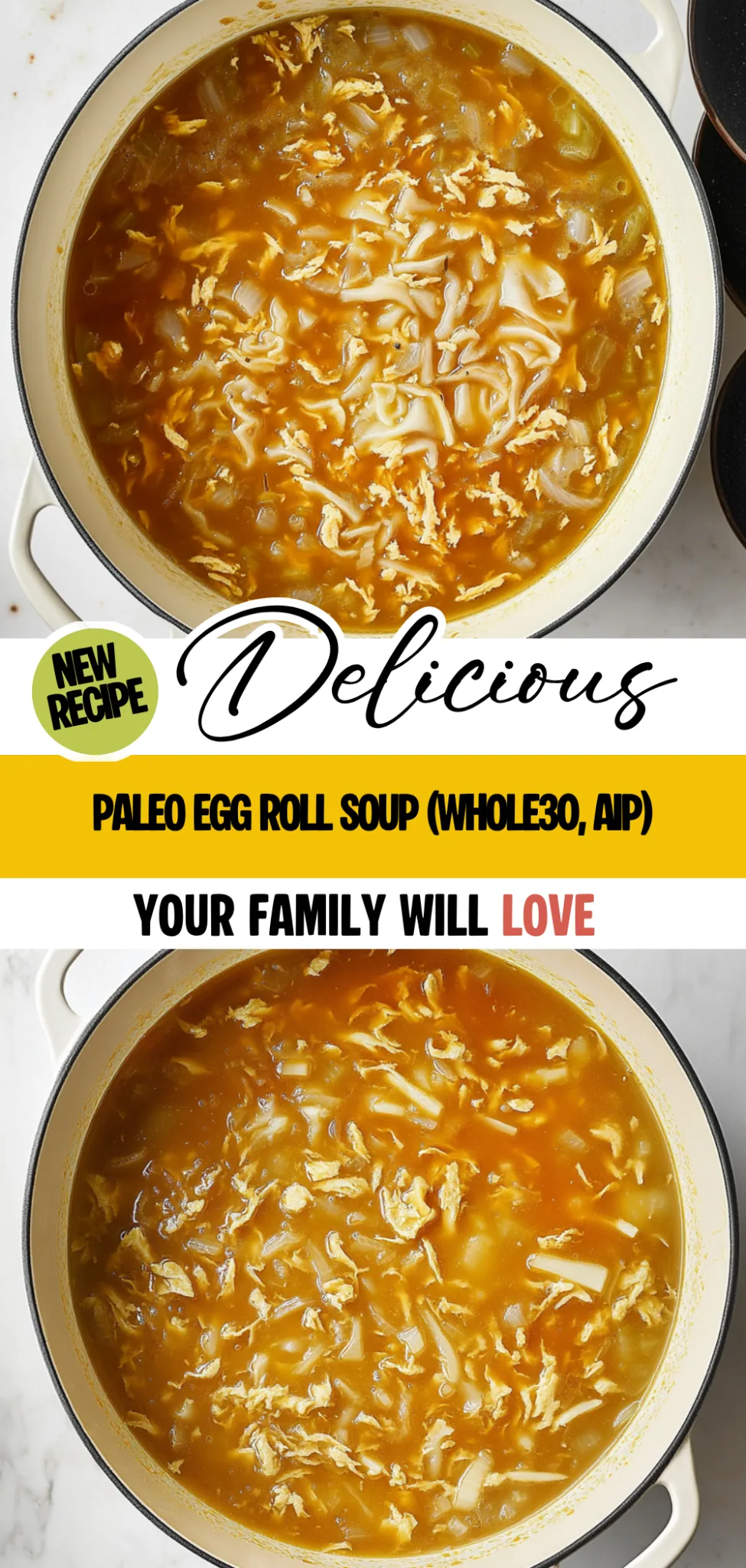
Are you ready to see how straightforward it is to make the Paleo Egg Roll Soup (Whole30, AIP) of your dreams??
1. SAUTÉ THE BASE
Start by building a delicious flavor foundation for your soup!
1. HEAT – In a large pot, heat the coconut oil over medium heat until it’s melted and shimmering. This will create a non-stick base for sautéing the onions.
2. SÁTÉ – Add the diced onion and sauté until translucent, about 5 minutes. You want them soft but not browned; this adds sweetness to your soup!
3. ADD FLAVOR – Stir in the minced garlic and grated ginger, cooking for another minute until fragrant. The aroma will be heavenly and signals that it’s time to move on!
2. COOK THE PROTEIN
This is where your soup starts to get hearty!
4. BROWN – Add the ground pork (or chicken) to the pot, breaking it up with a wooden spoon. Cook until browned, which should take about 5-7 minutes. Don’t rush this step; browning adds depth of flavor!
3. BUILD THE SOUP
Time to add all those vibrant veggies and seasonings!
5. POUR – Pour in the chicken broth, followed by the shredded cabbage, julienned carrots, and sliced mushrooms. The broth should bubble gently as you mix everything together.
6. SEASON – Stir in the coconut aminos, salt, and pepper, then bring the soup to a gentle boil. This step melds all those amazing flavors—your kitchen will smell incredible!
7. SIMMER – Reduce the heat and let it simmer for about 20 minutes, allowing the flavors to meld beautifully. You’ll know it’s ready when everything is tender.
4. SERVE IT UP
The final touches that make your soup shine!
8. LADLE – Ladle the soup into bowls and garnish with sliced green onions for a fresh crunch.
9. DRIZZLE & ENJOY – If desired, drizzle with sesame oil before digging in! Enjoy your healthy and flavorful Paleo Egg Roll Soup!
HANDY TIPS
- Use vegetable broth instead of chicken broth if you prefer a vegetarian option.
- Feel free to mix up the veggies; bell peppers or snap peas would work great too!
- For extra spice, consider adding some red pepper flakes while simmering.
Make these once, and I wager they will invade your dreams every night too! – Nagi x
FAQ – Paleo Egg Roll Soup (Whole30, AIP)
🥣 How long can I store the Paleo Egg Roll Soup in the fridge?
You can store this delicious soup in an airtight container in the refrigerator for up to 4 days. However, for the best flavor and texture, I recommend consuming it within 3 days. After that, it may lose about 10% of its original quality each day—so by day 4, it’s around 90% as good. Always give it a sniff before reheating; if it smells off, don’t risk it!
⏳ Can I skip the simmering time?
Nope! You really shouldn’t skip that simmering time. Allowing the soup to simmer for about 20 minutes is crucial for letting all those amazing flavors meld together. During this time, the cabbage softens beautifully while infusing the broth with its sweetness. Trust me, your taste buds will thank you for being patient.
❄️ Can I freeze this soup for later?
Absolutely! This Paleo Egg Roll Soup freezes wonderfully. To do so, let it cool completely before transferring it to freezer-safe containers or zip-top bags. It will keep well for up to 3 months in the freezer. When you’re ready to enjoy it again, thaw it overnight in the fridge and reheat gently on the stove. Just remember: never refreeze soup once it’s been thawed!
🌱 Is this recipe suitable for those following a Whole30 or AIP diet?
Yes! This Paleo Egg Roll Soup is not only Whole30 compliant but also adheres to AIP guidelines. It’s free from grains, dairy, and legumes while packing loads of flavor from fresh ingredients like ginger and garlic. If you’re looking to cater to specific dietary needs, just be mindful of any added garnishes like sesame oil, which some AIP followers might want to avoid.
🥕 Can I substitute ground pork with something else?
Definitely! While I love using ground pork for its rich flavor, you can easily swap it out for ground chicken or turkey if you prefer a leaner option. For a vegetarian twist, try using crumbled tofu or tempeh combined with extra mushrooms to maintain that hearty texture. Just be sure to adjust cooking times slightly as needed when switching proteins!
🤔 Why do I need to sauté the onion and garlic first?
Sautéing the onion and garlic at the beginning is a critical step because it builds layers of flavor right from the start! Cooking these aromatics helps release their natural sugars and enhances their natural sweetness, creating a flavorful base for your soup. Don’t rush this step—let them soften and turn fragrant before adding other ingredients.
🔄 Can I customize this soup with additional vegetables or toppings?
Absolutely! This soup is incredibly versatile. Feel free to add more veggies like bell peppers or snap peas during cooking or toss in some spinach right at the end for extra greens. You can also play around with toppings—crushed red pepper flakes are great if you like heat, or try adding fresh herbs like cilantro for freshness. The options are endless; get creative and make it your own!
Troubleshooting
I will continue to add more to this Troubleshooting section as I start seeing questions coming through from people who have made the recipe.
Troubleshooting tips
“My soup turned out too watery! 😩”
- You may have added too much chicken broth without adjusting the other ingredients. The broth should complement the veggies and meat, not drown them.
- If you didn’t allow it to simmer long enough, the vegetables might not have had time to release their moisture into the soup.
- I bet it was still YUM though!
“The ground pork in my soup is too dry! 😱”
- If you didn’t break up the ground pork well while cooking, it may not have cooked evenly, leading to some pieces drying out.
- Cooking it over too high heat can also cause moisture loss; medium heat is ideal for browning without burning.
- I bet it was still YUM though!
“My veggies are mushy and overcooked! 😅”
- If the soup simmered for longer than 20 minutes or at a rolling boil, your veggies can lose their texture and become overly soft.
- Cutting your cabbage and carrots too small can also lead to them breaking down faster during cooking.
- I bet they were still YUM though!
“The flavor is way too salty! 😳”
- You might have added too much salt or used a broth that was already salted; always taste as you go and adjust accordingly.
- If you used coconut aminos in addition to salt, that could also intensify the overall saltiness.
- I bet it was still YUM though!