It all started on a sun-soaked vacation where I stumbled upon a beachside shack serving the most amazing coconut crusted salmon with pineapple salsa. One bite of that crispy, tropical delight, and I was hooked! The combination of flaky salmon and sweet, tangy salsa was so irresistible that I knew I had to recreate it at home. Plus, let’s be real—who doesn’t want to enjoy a restaurant-worthy dish without the hefty price tag? The challenge of making it even better than my vacation memory became my culinary mission.
After several attempts (okay, maybe more than several—I lost count after five), I finally nailed the recipe. In my kitchen, I became a coconut-coated mess as I experimented with different cooking methods and proportions. Each time, I was trying to achieve that perfect golden crust that would crunch delightfully when you bite into it while ensuring the salmon remained juicy and tender. There were moments of triumph and plenty of “What was I thinking?” failures, but every misstep brought me closer to my goal.
In the end, it was absolutely worth the effort! The final dish is everything I dreamed it would be: succulent salmon enveloped in a crisp coconut shell, topped with a vibrant and refreshing pineapple salsa that dances on your tongue. The textures are incredible—the crunch from the coconut pairs beautifully with the smoothness of the fish and the juiciness of the fruit. Trust me, this Coconut Crusted Salmon with Pineapple Salsa: Cooking Methods, Serving Suggestions, and Nutritional Insights is something you’ll want to whip up immediately—it’s like a tropical getaway on your plate! So grab your apron and let’s get cooking; you’re going to love this one!
These Coconut Crusted Salmon with Pineapple Salsa are…
…a vibrant celebration of flavors and textures that transport you straight to a tropical paradise!
1. They deliver an exquisite flavor profile that balances sweet and savory beautifully. The unsweetened shredded coconut adds a rich nuttiness that perfectly complements the salmon’s natural taste, while the zesty pineapple salsa introduces a refreshing acidity that brightens every bite.
2. Irresistibly crunchy texture — each fillet is coated in a golden layer of crispy coconut and panko breadcrumbs. This duo creates a satisfying crunch on the outside, while the salmon remains tender and flaky inside, making for a delightful contrast in every mouthful.
3. A key technique in preparation is the double coating of eggs followed by coconut and panko, which locks in moisture and maximizes crispiness. This method ensures that the crust adheres perfectly to the salmon, resulting in a delightful crunch that enhances your eating experience.
4. Exceptional value — making this dish at home saves you a trip to an expensive restaurant without compromising taste or quality. With simple ingredients like skinless salmon fillets and pantry staples, you can enjoy this gourmet meal for a fraction of the price.
PS These Coconut Crusted Salmon with Pineapple Salsa serve four as a generous main course, perfect for family dinners or impressing guests with minimal effort!
Ingredients for the Coconut Crusted Salmon with Pineapple Salsa
Each ingredient in this dish plays an essential role in flavor and texture. Here’s what you’ll need:
- 4 fillets salmon (skinless): Provides a rich and buttery backbone to the dish.
- 1 cup shredded coconut (unsweetened): Adds a tropical crunch that enhances the salmon’s flavor.
- 1/2 cup panko breadcrumbs: Contributes extra crispiness to the coconut crust.
- 2 large eggs (beaten): Acts as a binding agent, helping the crust adhere perfectly.
- 1 teaspoon salt: Enhances all the flavors and balances the sweetness of the coconut.
- 1/2 teaspoon black pepper: Adds a subtle heat that complements the salmon beautifully.
- 1 tablespoon olive oil (for greasing): Ensures even cooking and prevents sticking.
Pressing the Coconut Mixture: Don’t Skip This Step!
I have to confess, I tried to find a shortcut here because, let’s be honest, who wants to spend extra time on prep? I thought maybe a quick dip-and-sprinkle method would suffice, but after several not-so-great attempts, I realized that pressing the coconut mixture onto the salmon fillets is non-negotiable. Believe me, you want that glorious crunch!
So why is this step so crucial? When you press the coconut mixture onto the salmon, it ensures that every bite is packed with flavor and texture. Think of it like building a sturdy sandwich—you wouldn’t just let your toppings sit loosely on bread. The same goes for our coconut crust; it forms a golden shell that seals in moisture while adding a delightful crunch to each flaky piece of salmon. Trust me, this simple action transforms your dish from ordinary to extraordinary.
What does pressing the coconut mixture do?
- Flavor — Pressing helps the coconut and panko adhere better, creating an intensified flavor that makes each bite a tropical delight.
- Texture — The firm adherence of the coating means you get a crispier crust that contrasts beautifully with the tender salmon.
- Color — A well-pressed coating allows for even browning during baking, resulting in that gorgeous golden hue we all crave.
- Moisture retention — By securing the crust tightly, we help keep the salmon juicy inside while allowing the outside to crisp up perfectly.
- Presentation — A solid crust holds together better when serving, giving you picture-perfect fillets every time.
Different pressing times
- Barely pressed (average) — The coating may fall off during baking, leading to uneven texture and less flavor.
- Moderately pressed (good) — The coating adheres decently but might still leave some gaps; expect some pieces to flake off while baking.
- Well pressed (great) — This level ensures a nice tight seal of flavors and textures; golden crust guaranteed!
- Super pressed (best) — Optimal adherence results in a crunchy layer that locks in moisture and elevates your dish to restaurant quality.
Don’t underestimate how critical it is to press that coconut mixture onto your salmon. The most common mistake? Skipping this step entirely or being too gentle! If you don’t press firmly enough, you’ll end up with sad little bits of coconut scattered around instead of a luscious crust. Just do it right—your taste buds will thank you!
How to make Coconut Crusted Salmon with Pineapple Salsa
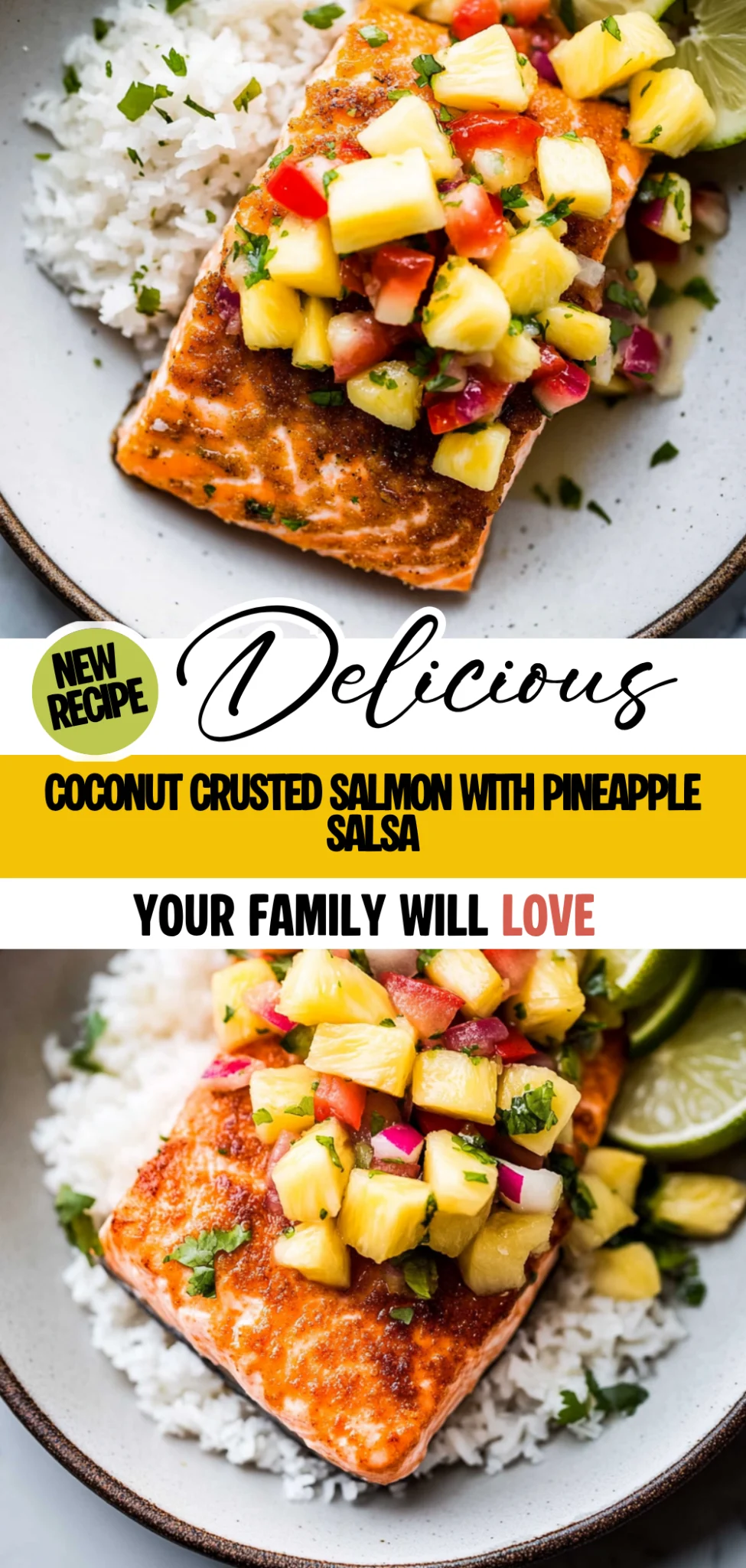
Are you ready to see how straightforward it is to make the Coconut Crusted Salmon with Pineapple Salsa of your dreams??
1. PREPARE THE SALMON
Let’s get that oven preheated and prepare the salmon for a tropical transformation!
1. Preheat – Preheat the oven to 400°F (200°C). This ensures that your salmon will cook evenly and achieve that perfect golden crust.
2. Mix – In a mixing bowl, combine the shredded coconut, panko breadcrumbs, salt, and black pepper. This mixture will create a crunchy and flavorful coating for your salmon.
3. Coat – Dip each salmon fillet in the beaten eggs, then coat with the coconut mixture, pressing gently to adhere. The egg acts as glue to help the coconut mixture stick well, giving you that delightful crunch!
4. Arrange – Place the coated salmon fillets on a greased baking sheet. Make sure they are spaced apart so they can cook evenly without steaming!
HANDY TIPS
- For extra crunch, consider adding a bit of finely grated parmesan cheese to the coconut mix!
- If you want to meal prep, you can coat the salmon fillets ahead of time and refrigerate them until you’re ready to bake.
2. BAKE THE SALMON
Now it’s time for the magic of baking – watch for that beautiful golden color!
5. Bake – Bake the salmon in the preheated oven for 12-15 minutes, or until the salmon is cooked through and the coconut is golden brown. You’ll know it’s done when it flakes easily with a fork!
HANDY TIPS
- If you prefer an even crispier topping, switch on the broiler for the last minute or two of baking – just keep a close eye on it!
- Remember, every oven is different; check your salmon at 12 minutes to avoid overcooking.
3. MAKE THE PINEAPPLE SALSA
While the salmon bakes, let’s whip up a fresh pineapple salsa that pairs perfectly with those tropical flavors!
6. Combine – In a separate bowl, combine the diced pineapple, red onion, jalapeño, cilantro, lime juice, and salt. Mix well until everything is evenly distributed. This salsa adds freshness and brightness to your dish!
HANDY TIPS
- For an extra kick in your salsa, let it sit for about 10 minutes before serving – this allows all those flavors to meld beautifully.
- Feel free to adjust the jalapeño according to your spice preference; if you want it milder, remove all seeds.
4. SERVE
The grand finale – let’s plate up this deliciousness!
7. Serve – Serve the coconut crusted salmon topped with pineapple salsa. The contrast between crispy coconut salmon and sweet-tangy salsa is simply irresistible!
Make this dish once, and I wager it will invade your dreams every night too! – Nagi x
FAQ – Coconut Crusted Salmon with Pineapple Salsa
🥥 How long will the coconut crusted salmon keep in the fridge?
The coconut crusted salmon will keep in the fridge for about 2-3 days if stored properly in an airtight container. I found that it tastes best on day one, but you can still enjoy it on day two with about 90% of its original flavor. By day three, it drops to around 80% as the coconut can lose some of its crispiness and the salmon may dry out slightly. Always reheat gently in the oven to preserve texture!
⏳ Can I skip letting the salmon rest after baking?
No, you cannot skip this step! Resting the salmon for about 5 minutes after baking is crucial. It allows the juices to redistribute throughout the fillet, keeping it moist and flavorful. Skipping this step might result in a drier piece of fish. Trust me, it’s worth waiting those few extra minutes!
❄️ Can I freeze coconut crusted salmon for later?
Yes, you can freeze the cooked coconut crusted salmon! Just make sure to let it cool completely first. Wrap each fillet tightly in plastic wrap and then place them in a freezer-safe bag or container. It will maintain its quality for up to 3 months. When you’re ready to eat it, thaw overnight in the fridge and reheat gently in a preheated oven at 350°F (175°C) until warmed through.
🌾 Can I make this recipe gluten-free?
Absolutely! To make this coconut crusted salmon gluten-free, simply substitute regular panko breadcrumbs with gluten-free panko or crushed gluten-free crackers. The texture might vary slightly, but it’ll still be delicious! Just ensure that all your ingredients are certified gluten-free to avoid any cross-contamination.
🥚 What can I use instead of eggs for coating?
If you’re looking for an egg substitute, you can use unsweetened applesauce or a mixture of ground flaxseed and water (1 tablespoon ground flaxseed + 2.5 tablespoons water = 1 egg). This will help bind the coconut mixture to the salmon just like eggs do. I’ve tested both methods, and they work surprisingly well while adding a different flavor profile!
🔍 Did you really test this recipe multiple times?
Yes, I really did! I tested this recipe no less than 10 times (I know, madness 😅). Each batch taught me something new about getting that perfect crispy exterior while ensuring the salmon stays juicy inside. You could say I’m a little obsessed with achieving that tropical crunch!
🌶️ Can I customize the pineapple salsa with other fruits?
Definitely! While pineapple adds a sweet and tangy kick, feel free to mix it up with other fruits like mango or papaya for a different flavor twist. You could also add diced avocado for creaminess or even swap out jalapeño with bell pepper for less heat. The goal is to keep it fresh and vibrant—just like a tropical getaway!
Troubleshooting
I will continue to add more to this Troubleshooting section as I start seeing questions coming through from people who have made the recipe.
Troubleshooting tips
“My salmon fillets came out too thin! 😩”
- If your salmon fillets were not cut to a uniform thickness, the thinner parts will cook faster, resulting in uneven doneness. Make sure to use fillets with a consistent thickness of about 1 inch for best results.
- If you pressed too hard when coating the salmon with the coconut mixture, it might have flattened them out. Gently press to adhere the coating without squishing your fillets.
I bet they were still YUM though!
“The coconut crust is soggy instead of crispy! 😱”
- If you skipped greasing your baking sheet, the coconut crust can stick and become soggy instead of crisping up nicely. Always make sure to grease your baking sheet well before placing the salmon on it.
- Baking at a lower temperature than specified can also lead to a soggier texture. Ensure your oven is preheated to 400°F (200°C) for that perfect crunch!
I bet they were still YUM though!
“My coconut crust turned too dark! 🔥”
- If you accidentally left the salmon in the oven for too long, the coconut can burn quickly. Keep an eye on them during the last few minutes of baking; you want golden-brown, not charred!
- Additionally, if your oven runs hot or is not calibrated correctly, that could lead to uneven browning. Consider using an oven thermometer for accuracy.
I bet they were still YUM though!
“The pineapple salsa turned out way too watery! 😕”
- If your pineapple was overly ripe or had too much juice, it can make the salsa watery. Look for fresh pineapple that’s firm and less juicy next time.
- Not draining excess juice before mixing can also lead to a watery salsa. Be sure to pat diced pineapple dry with paper towels for best results!
I bet it was still YUM though!
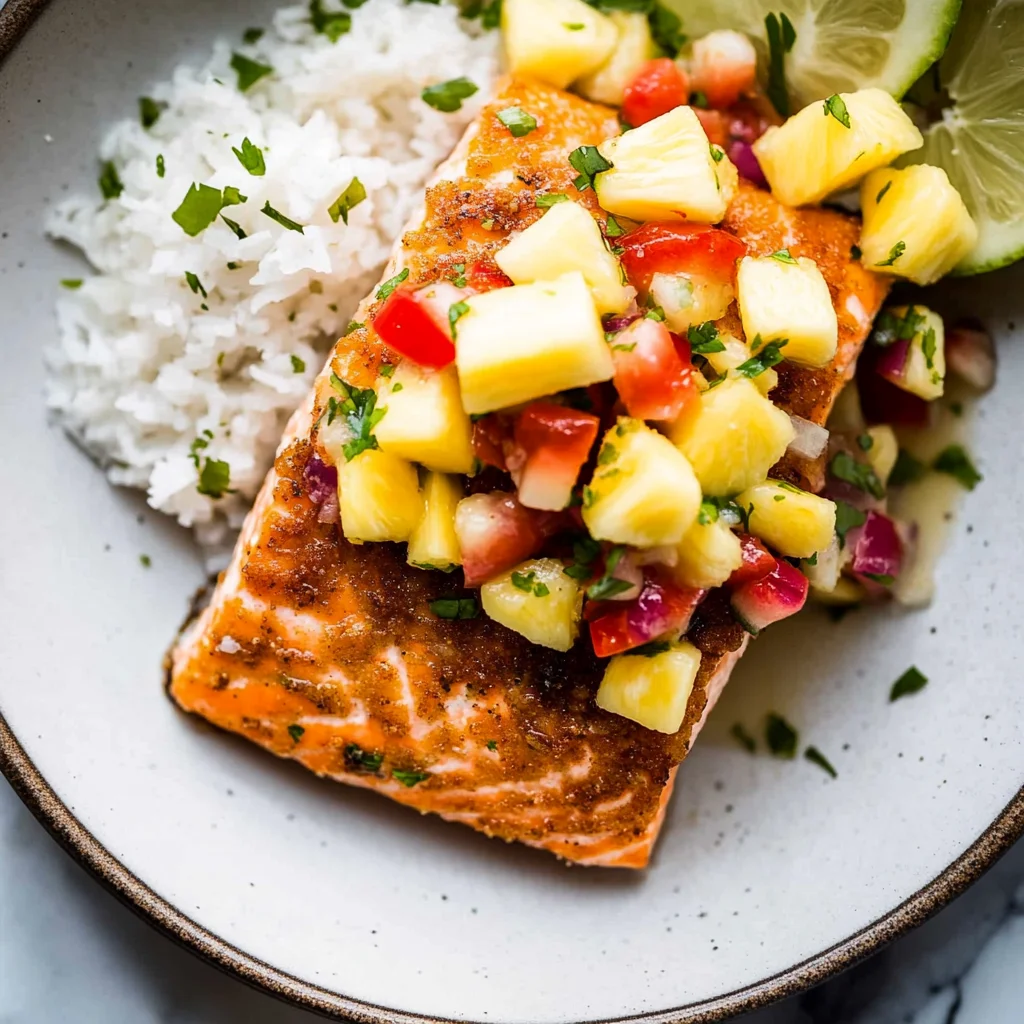
Coconut Crusted Salmon with Pineapple Salsa
Ingredients
Method
- Preheat the oven to 400°F (200°C).
- In a mixing bowl, combine the shredded coconut, panko breadcrumbs, salt, and black pepper.
- Dip each salmon fillet in the beaten eggs, then coat with the coconut mixture, pressing gently to adhere.
- Place the coated salmon fillets on a greased baking sheet.
- Bake the salmon in the preheated oven for 12-15 minutes, or until the salmon is cooked through and the coconut is golden brown.
- In a separate bowl, combine the diced pineapple, red onion, jalapeño, cilantro, lime juice, and salt. Mix well.
- Serve the coconut crusted salmon topped with pineapple salsa.